
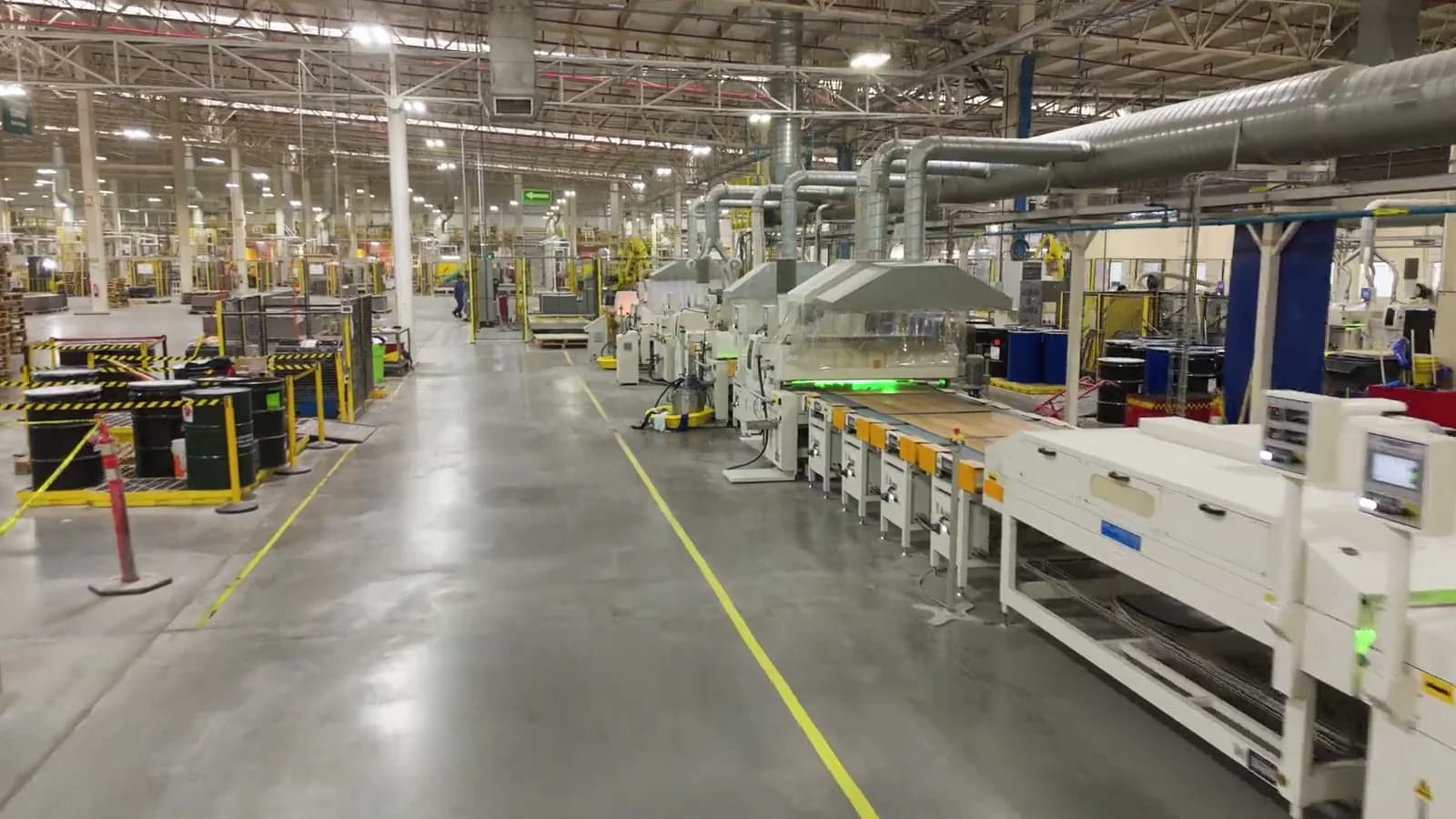
Does this sound familiar?
The need often becomes visible through recurring disruptions: a schedule that changes every day, queues between departments or rework consuming capacity. Everyone is making an effort, yet performance depends on people repeatedly stepping in. That is a reason to investigate the connections rather than add another isolated initiative.
A business that performs well can also benefit from questioning how it works. Growth, a different product mix or higher customer expectations can put existing arrangements under pressure. For an SME and a larger company, improvement starts with the same question: what prevents us from reliably delivering value today, and which decisions can we influence ourselves?
Improvement is a shared effort.
Operational excellence is a deeply rooted culture in which the whole organisation keeps learning to improve its work. It starts with the full involvement of senior management and connects strategy with daily practice. Customer value, safety, quality, costs and delivery reliability are considered together.
Lean tools help, but do not create an improvement culture by themselves. People need to identify deviations, investigate causes and learn from actions. Leaders provide direction, make time and take responsibility for follow-up. That combination supports lasting improvement and prevents a programme from fading when the initial attention moves elsewhere.
From insight to action.
Safety · Quality · Operations · Logistics · Product development
- Visual management
- Standardisation & 5S
- Structured problem solving
- Lean leadership
A culture of continuous improvement
Start with committed leaders and the real cause
An OpEx programme starts with senior management commitment. Together with your teams, we examine operations and priorities. Process observations and data help explain waste and bottlenecks. From there, we choose focused improvements and agree who follows up progress.
Four pillars that reinforce one another
- Visual Factory
Make goals, performance and deviations visible through understandable KPIs. The conversation about that information determines the next action.
- Structural Problem Solving
Investigate causes, test assumptions against facts and assess whether a solution genuinely resolves the problem.
- Standard Work
Establish a workable current method. The standard helps share knowledge and provides a starting point for further improvement.
- Lean Leadership
Connect the pillars through example, coaching and daily follow-up. From directors to the workplace, everyone understands their contribution and responsibility.
Sustain improvement through behaviour and leadership
We work with leaders on clear expectations, ownership and a regular improvement rhythm. People need to be able to raise problems and contribute to solutions. The organisation develops the ability to review and adjust its new ways of working itself.
A closer look at our approach.
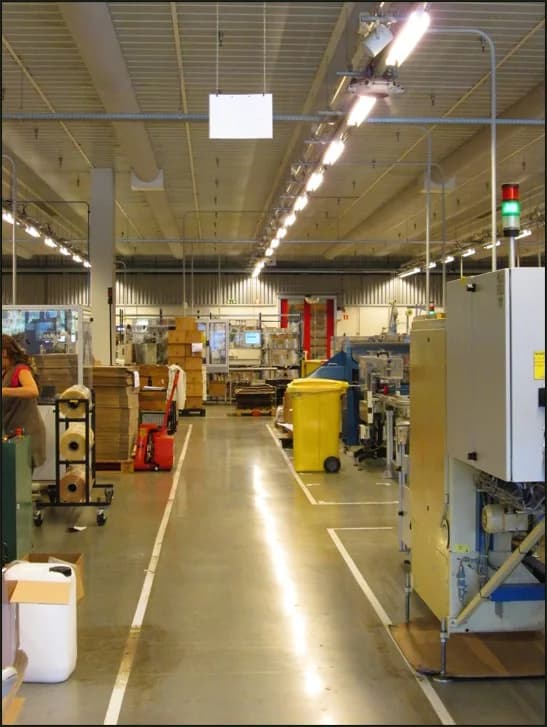
Process flow and the eight wastes
We follow work from beginning to end and examine where time, resources or knowledge are lost. The eight wastes offer a practical lens: unnecessary transport, excess inventory, unnecessary motion, waiting, overproduction, overprocessing, defects and rework, and unused talent. They can occur in production, logistics and supporting processes.
Someone searching for materials or repeatedly waiting for approval shows that a process involves more than the operation itself. Together, we investigate causes and effects across the chain. A local speed improvement must not generate more inventory or rework elsewhere. We therefore assess the change against overall flow and customer needs.
Measure to understand causes
We select KPIs that fit the question and agree definitions and a baseline. OEE, Overall Equipment Effectiveness, helps examine equipment losses through availability, performance and quality. A single percentage becomes useful when the downtime, speed losses or quality issues behind it are understood.
For manual processes, Ronald also uses OOE: Overall Operator Effectiveness. This is his practical perspective for making losses in work visible, such as waiting for materials or unnecessary walking. We do not present it as a universal standard or an assessment of individual employees. The analysis focuses on working conditions and the process. We agree suitable measurements together, so facts guide improvement and people understand where they can act.
Involve people in a workable solution
The people doing the work each day often recognise where agreements and reality diverge. Their knowledge helps distinguish a cause from a symptom. We make room to discuss those observations and investigate possible changes. This needs leaders who listen, protect priorities and help remove obstacles.
Improvement also requires time and decisions from your organisation. Who will contribute, who can decide and which other activities will receive less attention temporarily? Discussing this early helps avoid placing an improvement initiative on top of an already full workload. A feasible change fits the people, resources and responsibilities that are actually available.
Give improvement a lasting place in daily work
A new way of working becomes meaningful when people understand it and can apply it. We therefore consider practical agreements, instructions and follow-up. Who notices a deviation? When is it discussed? Who makes sure a decision reaches the people who need to act on it? These questions connect change with daily operations.
Standards provide a shared starting point that can continue to improve. We discuss how new colleagues learn the approach and how leaders check whether agreements still help. Coaching and focused knowledge transfer can support this. The aim is for your organisation to recognise causes more effectively and continue making considered adjustments as external support reduces.
- Defects and rework
- Overproduction
- Waiting
- Unused talent
- Transport
- Inventory
- Motion
- Overprocessing
Improvement your team can carry forward.
Ronald Schuermans combines more than 35 years of operations and supply chain experience with a practical approach to improvement and leadership.
Ronald Schuermans is the founder and your direct counterpart at Continuo Consulting. He has built more than 35 years of experience in operations, supply chain and general management, in employed and independent roles. Responsibility at plant, executive and COO level taught him both the strategic choices and their consequences on the shop floor.
He has also worked independently since 2012. His approach is practical: understand the situation, substantiate decisions and implement them with the organisation. Respect for people, ethical conduct and involvement guide that partnership. When a question needs additional expertise, Ronald can involve his professional network in a targeted way. Each person’s contribution and responsibility are clearly agreed beforehand.
Good to know before we start.
Is operational excellence the same as Lean?
Lean offers principles and tools for examining customer value, flow and waste. Operational excellence also includes the culture and leadership needed to use those insights every day. From senior management to the shop floor, everyone has a role in decisions, problem solving and follow-up. Introducing tools alone is therefore insufficient.
Do our processes and data need to be fully organised first?
No. Available information and observations provide a starting point. We make uncertainty visible and discuss what additional evidence a decision needs. You do not need to build an extensive measurement system beforehand. We do need access to the people involved and an honest understanding of the operation.
What results should we expect?
We examine the facts and agree the improvement your organisation needs and how to measure it. This may involve shorter changeovers, more usable output, less waste or better quality. Feasibility depends on the process, starting point and execution. We do not promise a general percentage in advance; we agree concrete objectives, measurements and responsibilities.
Where do we begin if the problem is not yet clear?
We start with what you experience today: rising costs, delays, quality issues or unclear responsibilities. Together, we look at the operation on the floor and the available information. This helps distinguish symptoms from causes and identify which question needs attention first. You do not need a fully developed improvement plan beforehand.
Is operational excellence relevant to an SME?
Even in a smaller organisation, handovers, planning and daily decisions can consume unnecessary time. We adapt the approach to your scale, available people and priorities. It does not need to become a large programme. We look for a workable way to improve that suits your organisation’s everyday reality and capacity to take action.
How do we involve employees in change?
Employees understand the practical obstacles in their work. We therefore involve them in observations, improvement choices and trying out new agreements. Leaders explain why things are changing, listen to concerns and help embed new behaviour in daily operations. Your organisation deliberately makes time and space available for that contribution.
What does Continuo add alongside our own team?
We bring an external perspective and experience of operational responsibility. Your team remains essential for understanding the organisation and putting changes into practice. Together, we test assumptions, make decisions concrete and work on solutions that can receive internal support. The guidance helps your own people continue the work themselves.
What happens in an initial conversation?
You can call or email Ronald with your question. In an initial conversation, we explore the situation, your expectations and what has already been tried. We then discuss whether support is appropriate and which next step could be useful. A conversation does not automatically lead to a full programme; the need determines the scope.
Let’s discuss your challenge.
Tell us what your organisation is dealing with. Together, we can explore the support that fits.